
Greta Zimmermann · 12 October 2026
Community Wellness Programs Integrate Woodland Routes into Outdoor Therapy and Group Fitness Initiatives
Community wellness programs across multiple regions have incorporated woodland routes into structured outdoor therapy sessions and group fitness activities as a direct response to documented health trends. Data from public health agencies shows rising participation rates in nature-based interventions, with programs adapting local trail networks to support both mental health support and physical conditioning.
Program Structures and Integration Methods
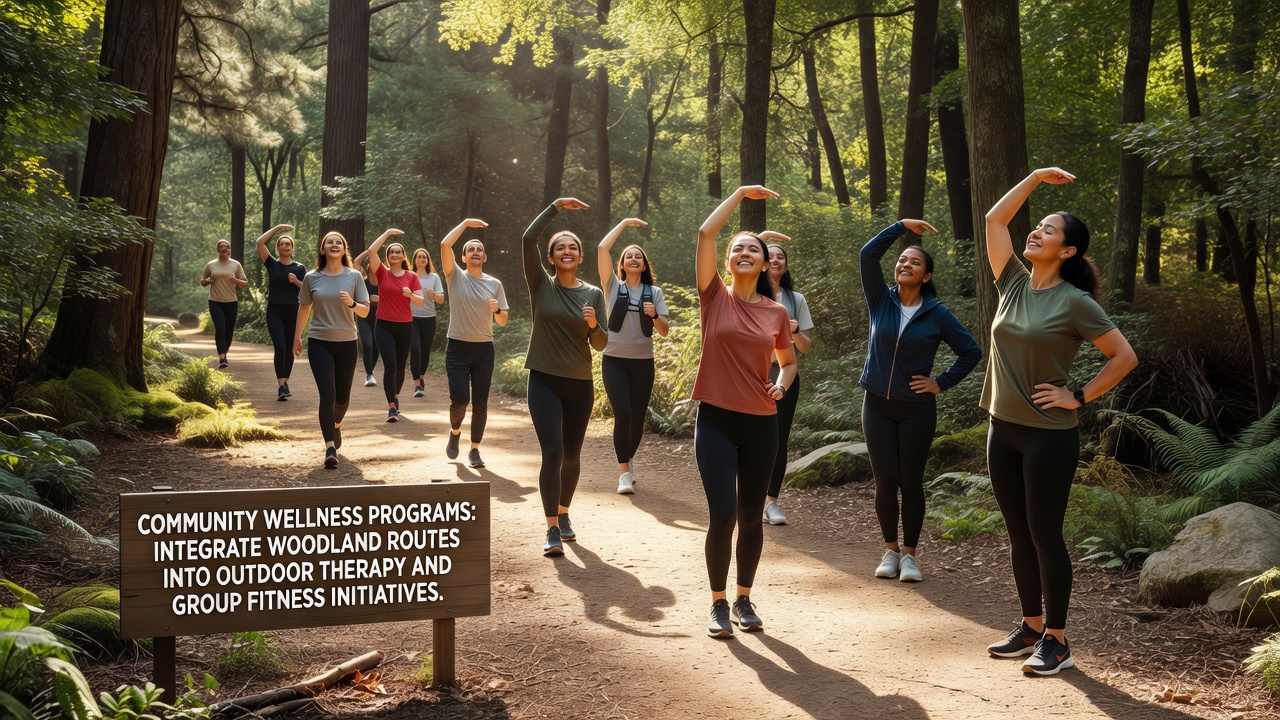
These initiatives typically combine guided walks along established woodland paths with therapeutic elements such as mindfulness exercises and cognitive behavioral techniques adapted for outdoor settings. Group fitness components include circuit training, resistance movements using natural terrain, and cardiovascular intervals paced along marked routes, while researchers at institutions like the National Institutes of Health have tracked physiological responses in similar environments. Sessions often run in cohorts of 8 to 15 participants, scheduled during daylight hours to maximize safety and visibility along the paths.
Coordination between local health departments, parks authorities, and certified therapists ensures routes meet accessibility standards, with modifications for varying mobility levels. In several documented cases, programs have mapped specific segments of woodland trails for low-impact therapy versus higher-intensity fitness zones, creating clear delineations that allow mixed-ability groups to operate simultaneously without overlap.
Data on Participation and Health Metrics
Figures from the Centers for Disease Control and Prevention indicate that community-based physical activity programs incorporating natural environments recorded a 22 percent increase in sustained attendance compared to indoor-only equivalents between 2023 and 2025. Observers note similar patterns in October 2026 reports, where preliminary tallies from regional coordinators showed continued enrollment growth amid expanded trail access. Studies published through academic channels reveal measurable reductions in reported stress markers and improvements in cardiovascular endurance among participants completing eight-week cycles.
Monitoring protocols include pre- and post-session assessments using standardized scales for mood and physical capability, along with optional biometric tracking via wearable devices. These records feed into aggregated datasets that health agencies use to evaluate program efficacy across demographics.
Regional Adaptations and Examples
Programs in North American jurisdictions have partnered with municipal forestry departments to maintain dedicated routes, while Australian health authorities through the Department of Health and Aged Care have funded pilot projects linking coastal woodland paths with therapy modules. Canadian provincial networks similarly integrate trail systems managed by parks commissions, emphasizing seasonal adjustments that account for weather patterns affecting path conditions. Each variation maintains core elements of supervised activity and progressive fitness benchmarks.
One study conducted across multiple sites documented how terrain variations along woodland routes contribute to balanced muscle engagement during group sessions, with participants progressing from flat segments to moderate inclines as fitness levels advance. Coordinators adjust group sizes and pacing based on these environmental factors rather than fixed indoor protocols.
Training Requirements and Safety Protocols
Facilitators complete certifications in outdoor first aid, group dynamics management, and specialized modules on nature-assisted therapy techniques. Safety measures encompass route inspections before each session, weather monitoring systems, and emergency communication devices carried by leaders. Public records from participating agencies list standardized ratios of one supervisor per six participants for therapy-focused groups and adjusted ratios for fitness segments.
Equipment remains minimal, relying on bodyweight exercises and portable markers for route guidance, which reduces logistical overhead while keeping activities aligned with natural surroundings. Updates to protocols occur annually, incorporating feedback from participant surveys and incident reports.
Conclusion
Community wellness programs that integrate woodland routes continue to expand their reach by aligning therapeutic objectives with measurable fitness outcomes along shared trail infrastructure. Ongoing data collection from sources including government health bodies supports refinement of these models, with October 2026 marking another cycle of enrollment and evaluation across active regions.