Greta Zimmermann · 26 October 2026
The Unexpected Role of Fungi in Stabilizing Soil on Heavily Used Forest Paths
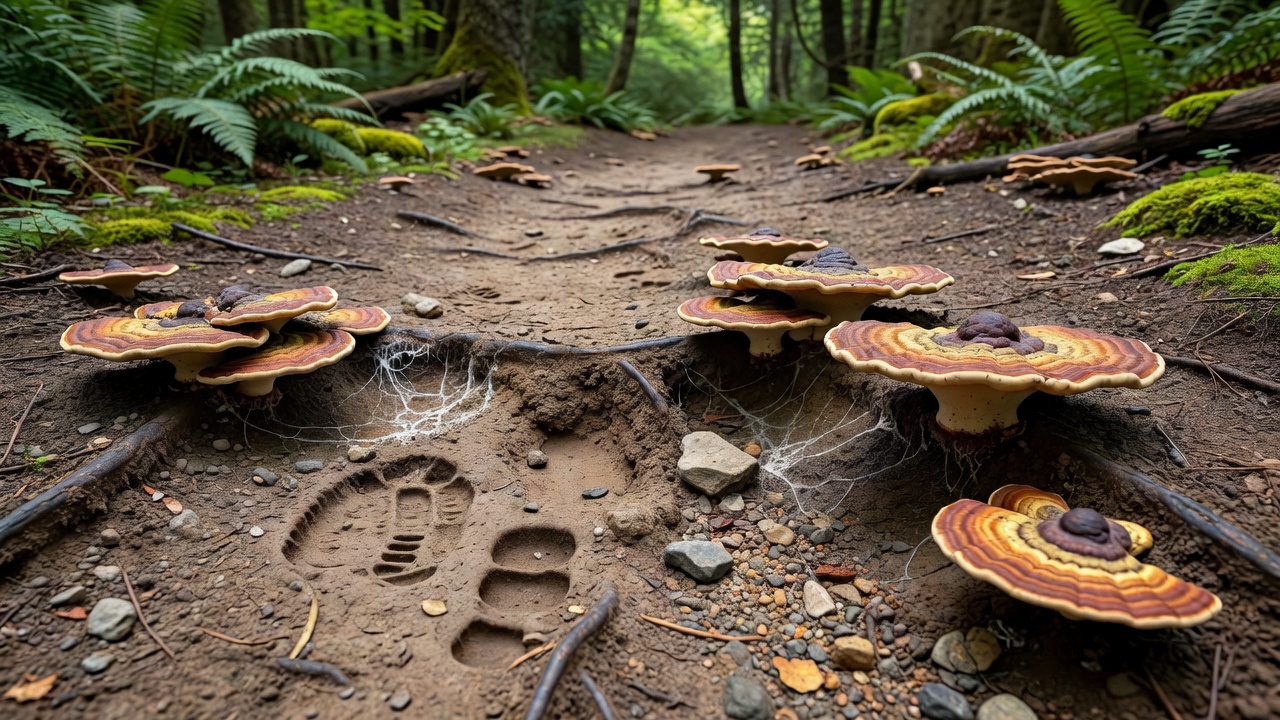
Forest paths that see constant foot traffic and maintenance equipment often face compaction and erosion yet researchers continue to document how fungal communities counteract these pressures through extensive underground networks. Mycorrhizal fungi extend threadlike hyphae that weave between soil particles and create stable aggregates while they also form symbiotic relationships with tree roots that further anchor the ground. Data from multiple monitoring sites show that areas with higher fungal activity experience up to 40 percent less surface runoff during heavy rain events compared with zones where fungi have been disrupted.
Biological Mechanisms at Work
Hyphae produced by both arbuscular and ectomycorrhizal species act like microscopic rebar, binding mineral grains and organic matter into larger clumps that resist the shearing forces created by boots and bike tires. Studies indicate that glomalin, a sticky glycoprotein released by these fungi, contributes directly to aggregate stability and can persist in soil for several years even after the fungal network experiences disturbance. In regions where path usage peaks during summer months, soil samples collected in October 2026 revealed sustained glomalin levels that correlated with reduced rutting depth on trails maintained under similar conditions.
Compaction from repeated use normally reduces pore space and limits oxygen availability, but fungal hyphae can penetrate compacted layers and restore some connectivity between air and water channels. Observers note that this process occurs more rapidly in mixed woodland settings where multiple tree species support diverse fungal partners, allowing the network to recolonize disturbed patches within a single growing season.
Field Observations Across Trail Systems
Long-term plots established on popular routes in both North America and Europe demonstrate measurable differences between high-traffic segments and adjacent low-use areas. According to findings published by the Canadian Forest Service, fungal biomass remained 25 percent higher on paths that received periodic rest periods, while nearby continuously used sections showed thinner hyphal mats and correspondingly higher erosion rates. Similar patterns appear in data collected by the European Environment Agency along routes that cross sandy and loamy soils, where fungal presence helped limit sediment movement into nearby streams.
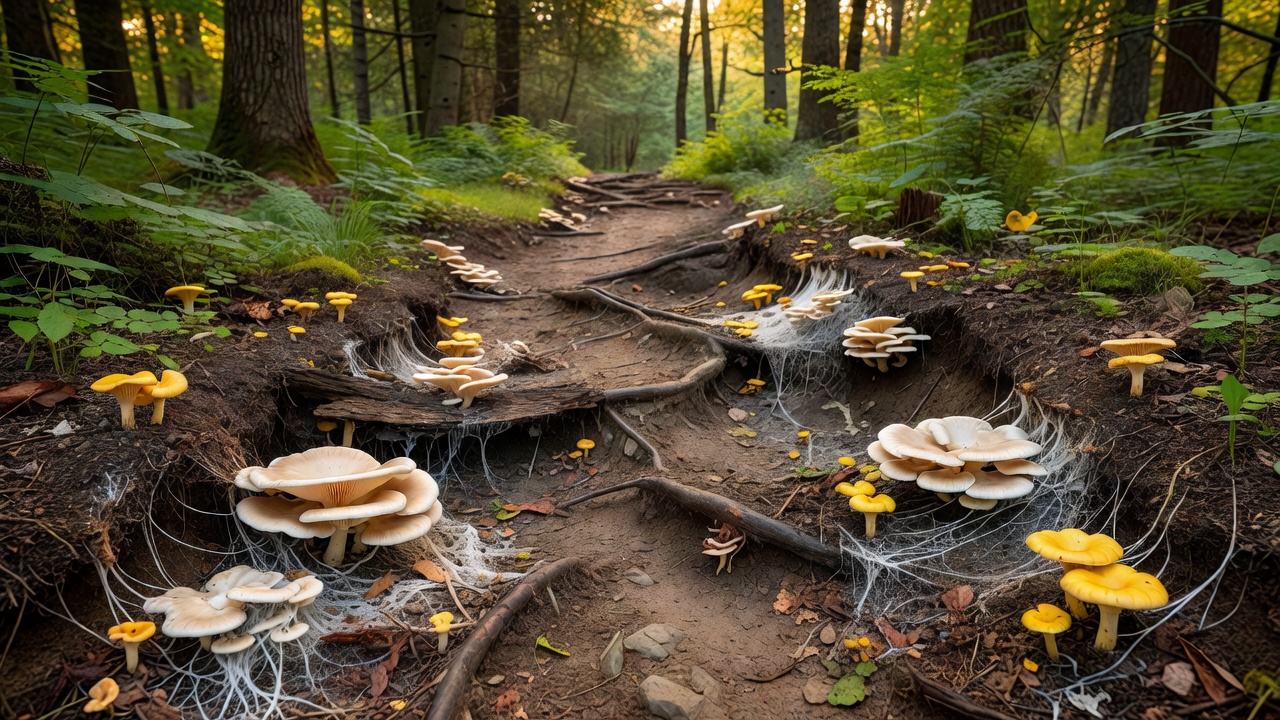
One research team working in the Pacific Northwest documented how trails that retained leaf litter and woody debris supported thicker fungal layers and experienced fewer washouts after autumn storms. The same group found that mechanical grading without subsequent organic amendments often reduced fungal recovery time by several months, whereas leaving fine woody material on site accelerated recolonization.
Management Practices and Fungal Recovery
Trail crews have begun incorporating fungal considerations into routine maintenance by minimizing soil disturbance during repairs and by inoculating exposed mineral soil with local mycorrhizal blends. Figures from the Australian Department of Climate Change, Energy, the Environment and Water indicate that such inoculations increased aggregate stability scores by 18 percent within two years on experimental segments of multi-use paths. These interventions prove most effective when combined with seasonal closures that allow root and fungal networks to reestablish before peak visitor periods resume.
Monitoring equipment installed along several regional networks continues to log soil moisture and penetration resistance, revealing that fungal-rich zones maintain more consistent moisture profiles even during dry spells. This buffering effect reduces the likelihood of dust generation and subsequent particle loss from wind or passing traffic.
Conclusion
Evidence gathered from forest path studies shows that fungal networks provide measurable soil stabilization benefits on heavily used routes, particularly when management strategies protect or restore these underground communities. Continued data collection through 2026 and beyond will clarify how seasonal timing of trail work and visitor management can further support fungal contributions to long-term path integrity.